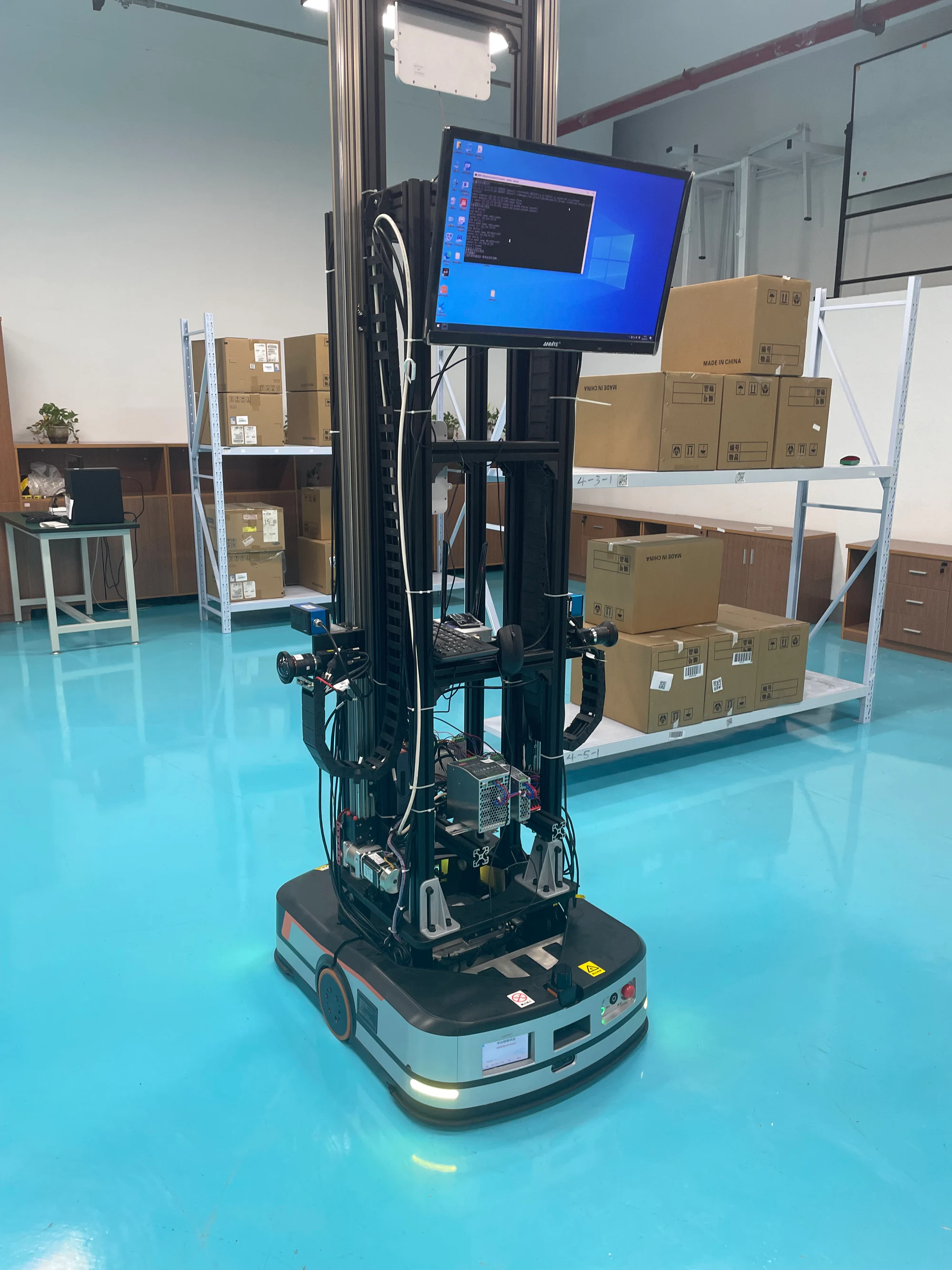
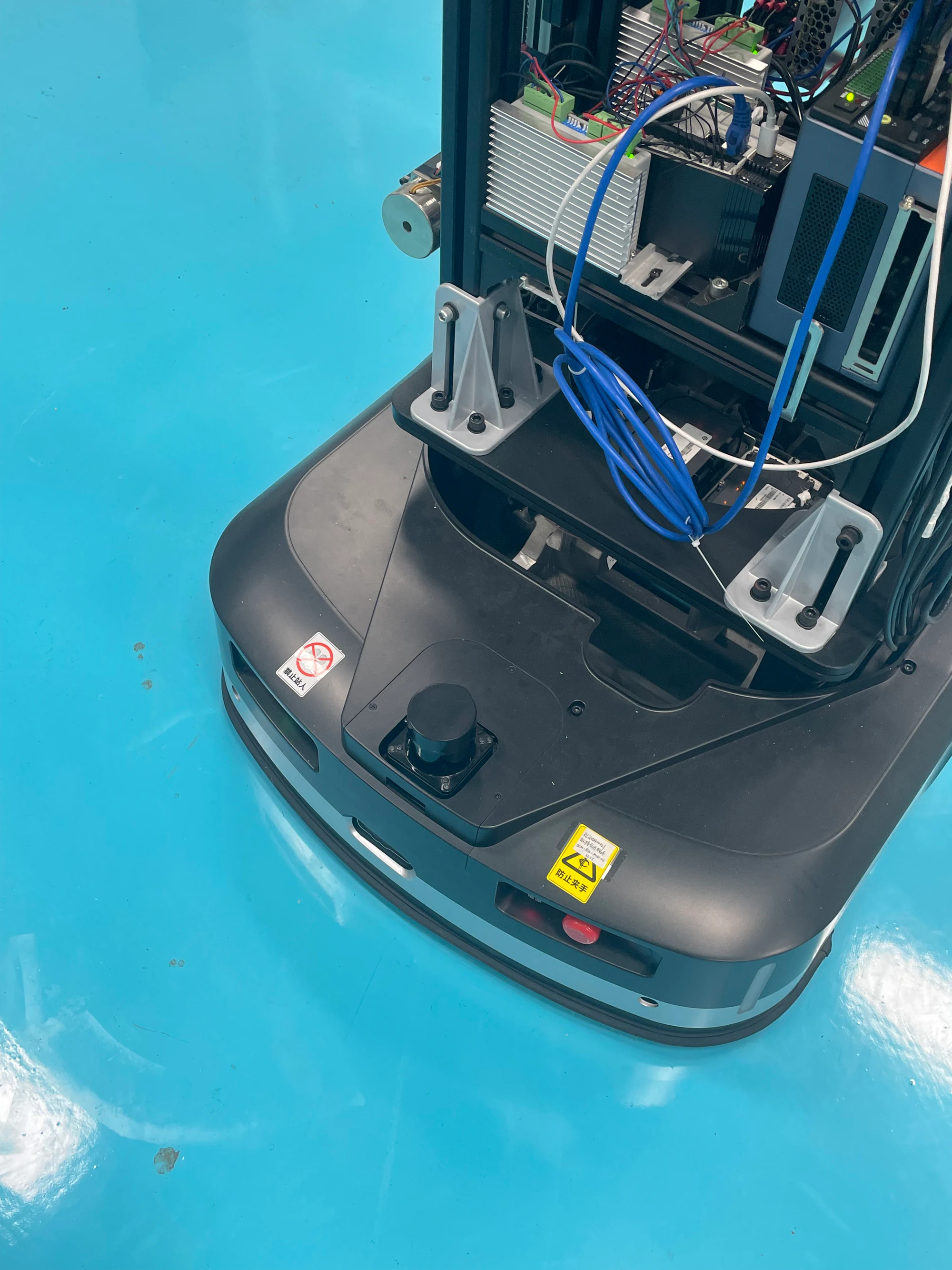
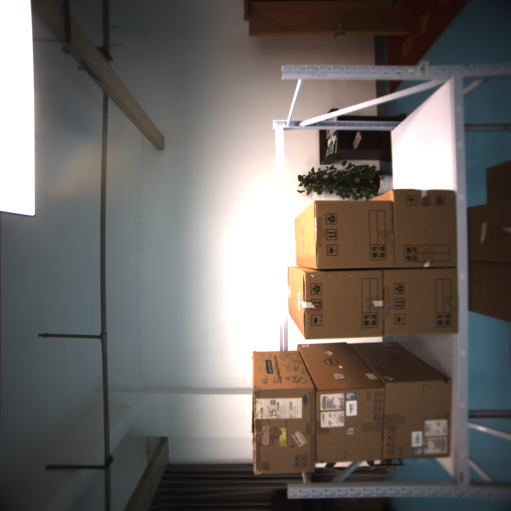
The AGV follows the warehouse route and pauses at defined inspection points.
Autonomous
Inventory
Robot
Overview
An autonomous warehouse inspection robot that coordinates mobile navigation, multi-height sensing and inventory reconciliation across stacked storage.
My work focused on connecting the robot’s sensing and control stack: coordinating AGV movement, PLC-driven camera positioning, RGB and depth capture, RFID collection and the operator-facing processing interface.
ScopeSystem integrationSensor integrationPython developmentPoint-cloud processing
One inspection run / Four coordinated systems
MOVE. POSITION.
CAPTURE. RECONCILE.
A PLC moves the sensing carriage through lower, middle and upper capture heights.
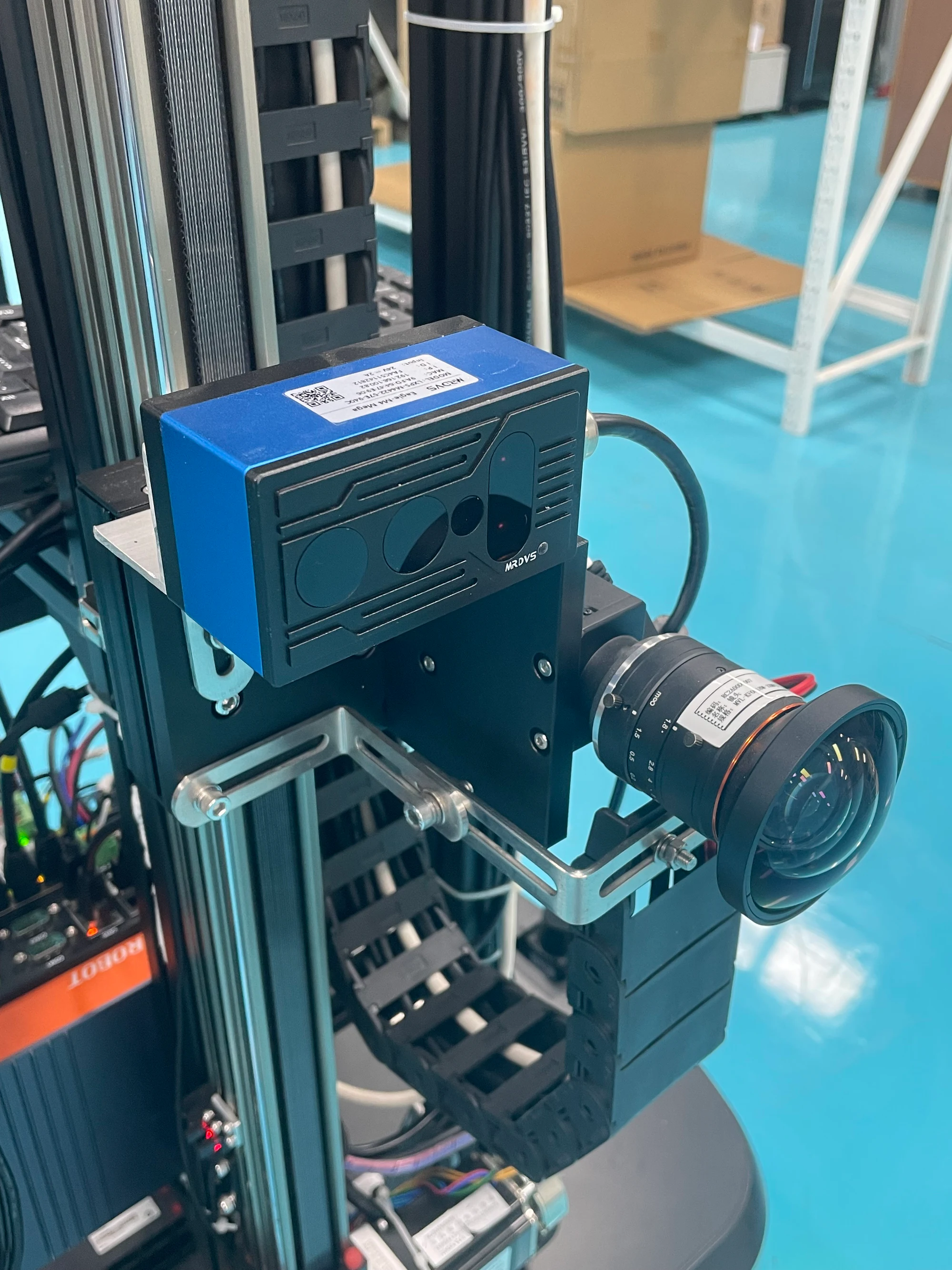
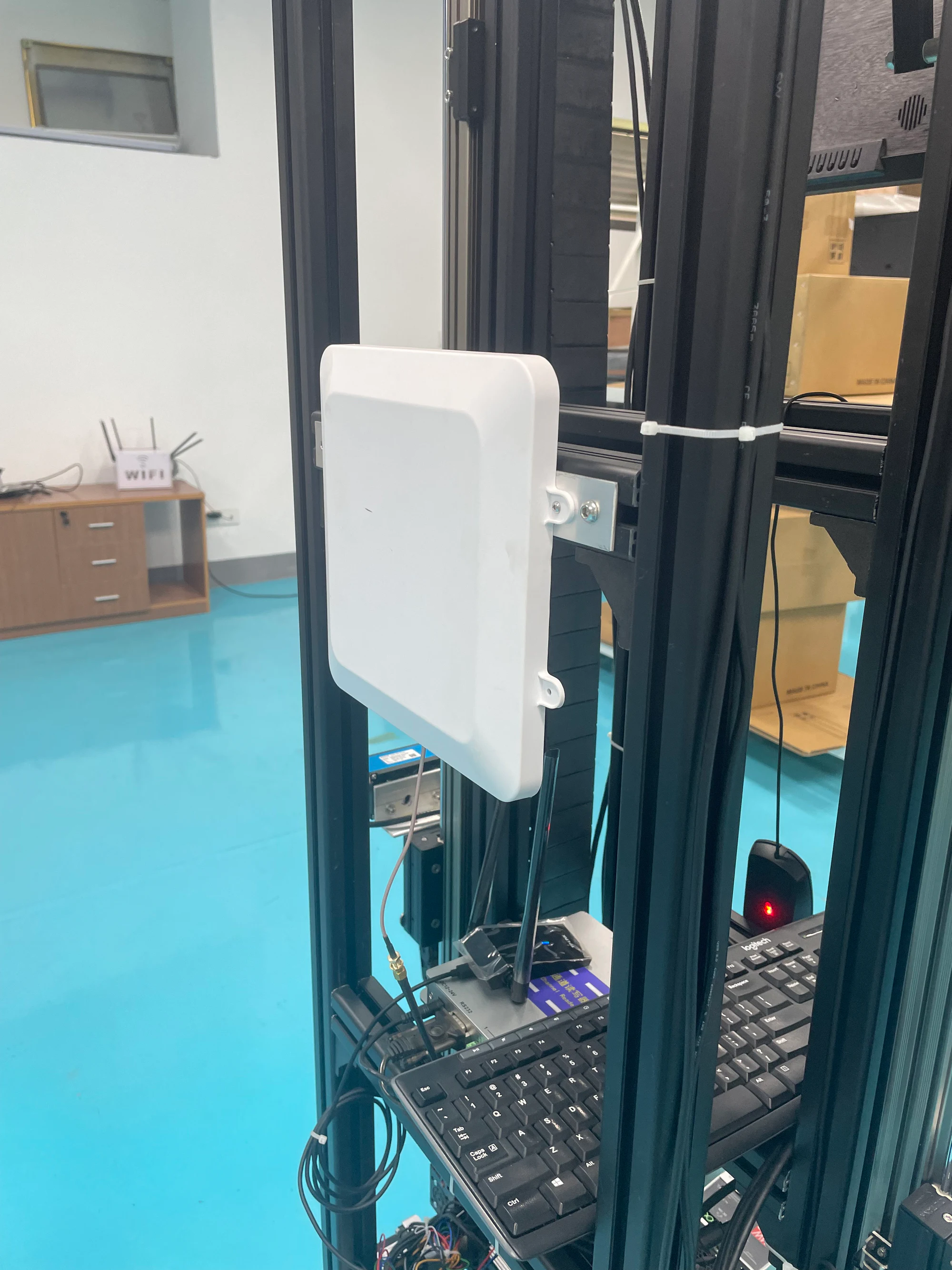
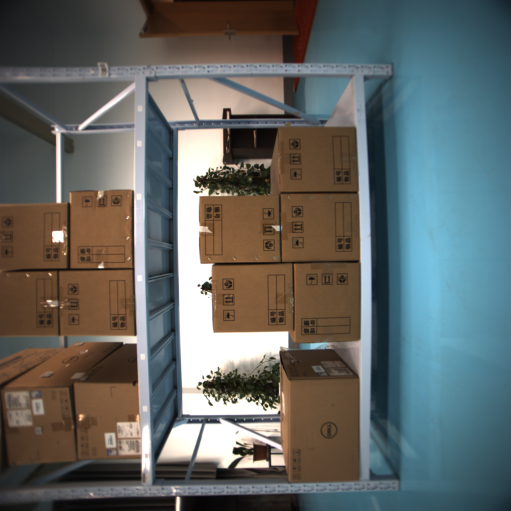
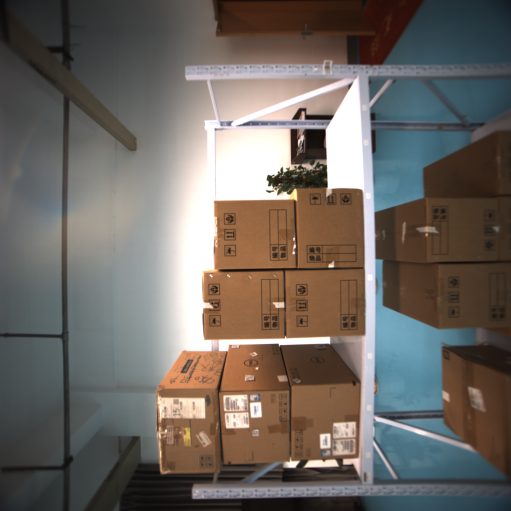
Left and right RGB-depth pairs record shelf images and point clouds while RFID captures tag data.
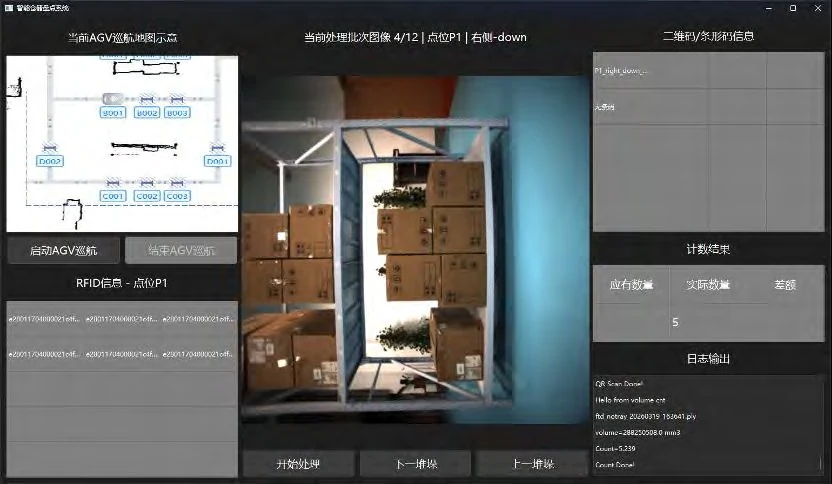
The interface combines barcode results, RFID records and estimated box counts for review.
EXTEND THE ROBOT’S VIEW
FROM FLOOR TO HIGH SHELF.
A vertical sensing mast turns a mobile base into a two-sided inspection platform. At each stop, the carriage moves through three heights so one route can cover both sides of a multi-level warehouse aisle.
FROM DEPTH POINTS
TO A BOX COUNT.
Each capture is indexed by inspection point, aisle side and carriage height. The Python pipeline pairs the RGB image with its PLY or TXT point cloud, filters the measured scene and estimates quantity from occupied volume.
Index the capture
Organise left and right observations at lower, middle and upper heights, then pair each image with its corresponding point cloud.
POINT / SIDE / HEIGHTFilter the scene
Apply a 0.01 voxel size, crop to a calibrated 3D region and remove statistical outliers before measurement.
5 NEIGHBOURS / STD RATIO 2.0Integrate volume
Use a 10-neighbour search in the XZ plane to estimate local point spacing, then accumulate local area multiplied by depth from the reference plane.
V ≈ Σ dᵢ² · (yref − yᵢ)Count and review
Divide the integrated volume by the known box volume, round the estimate and review it beside barcode and RFID records in the operator interface.
N = ROUND(V / (500 × 310 × 360 MM³))SENSE. FILTER. COUNT.
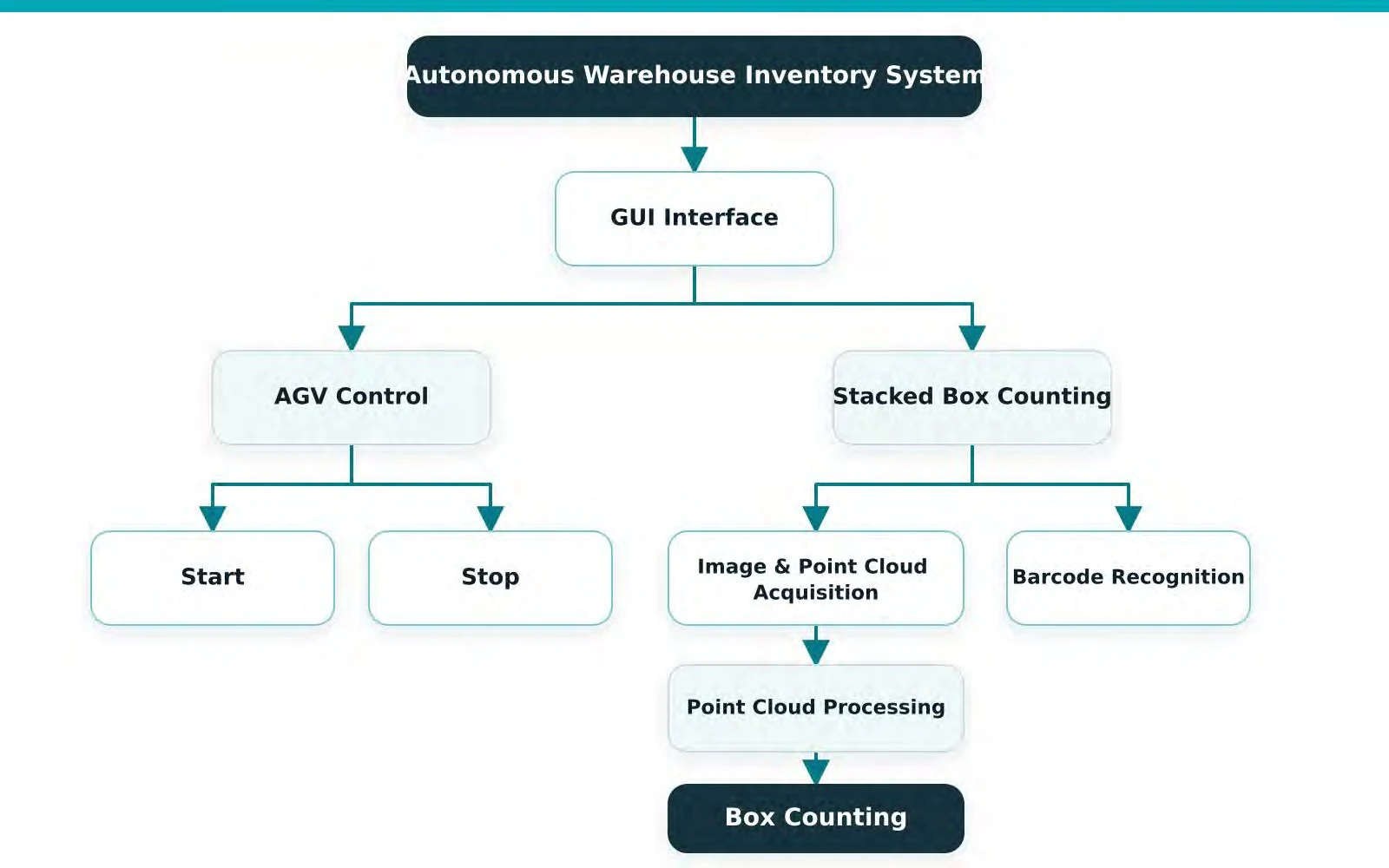
The Python control layer connects AGV commands with camera and RFID acquisition. The processing layer filters each point cloud to the shelf region, estimates occupied volume and compares the count with item-level identification data.
Route
Send the AGV along its inspection path and monitor arrival at each capture point.
Acquire
Trigger lower, middle and upper RGB-depth capture on both sides of the aisle.
Process
Filter each point cloud to the shelf region and estimate stacked-box quantity.
Review
Compare expected and observed counts with barcode and RFID evidence in the interface.
Outcome and validation
Sense. Identify. Count.
One workflow combines three-height RGB-D capture, RFID/barcode identification and volume-based box counting. Preliminary warehouse tests are documented; customer-site validation remains open.
HYPOMIMIA
Digital Therapy / Computer Vision / Rehabilitation HCI